
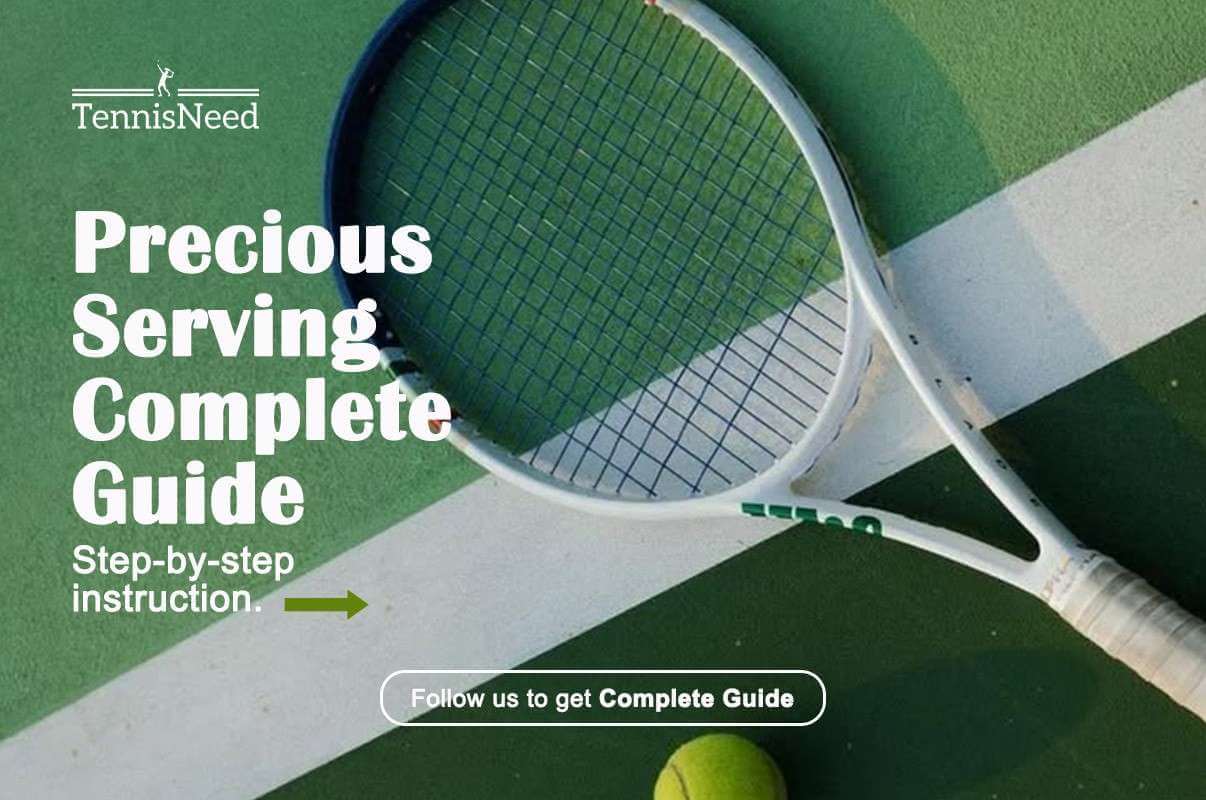
Most tennis matches are best of three sets: the first player to win two sets wins, so a match lasts two or three sets. Men’s singles at the four Grand Slams (Australian Open, French Open, Wimbledon and US Open) is best of five sets, so a player must win three sets and the match lasts three to five sets.
Key takeaways:
- Best of 3: first to win 2 sets; used in most ATP and WTA events, women’s Grand Slam singles, college, juniors and recreational tennis.
- Best of 5: first to win 3 sets; used in men’s singles at all four Grand Slams.
- A set is won by the first player to win six games with a lead of at least two games; at 6-6 a tiebreak normally decides it.
- A game is won by the first player to win four points with a lead of at least two points (deuce and advantage apply at 40-40).
- A match cannot end level in sets; the deciding set (3rd or 5th) always produces a winner.
- Always check event rules: doubles, team events and some tours replace the final set with a 10-point match tiebreak.
In most cases, tennis matches are played using the best-of-three approach, where a player must win two sets to emerge victorious. In men’s singles for all four Grand Slam events, best-of-five is applied, meaning that a player has to win three sets.
Total sets depend on the tournament, game type, and other rules of the event. In this blog guide, we will discuss about how many sets are there in a tennis match. Lets reading,
How Many Sets in a Tennis Match?
Understanding tennis sets will help you to follow the scores in games, see the crucial sets, and find out why some games last long, and others finish in a very short time.
This guide tries to help you understand the different types of games played, final set rules in Grand Slams, terminology in tennis, and scoring in games.
The Quick Answer: Sets by Match Format
| Match format | Sets needed to win | Maximum sets | Common uses |
|---|---|---|---|
| Best of 3 | 2 | 3 | Most ATP and WTA matches, recreational tennis |
| Best of 5 | 3 | 5 | Men’s Grand Slam singles |
In most professional tennis games, a best-of-three system is used, where one wins by getting two sets irrespective of whether the other person gets one set or not.
Best of five needs three set wins and makes for a longer game. This is used for men’s singles games at the Australian Open, French Open, Wimbledon, and US Open.
Some team and special events have different rules, so be sure to verify the event rules whenever necessary.
Possible scores and minimums
| Best of 3 | Best of 5 | |
|---|---|---|
| Sets needed to win | 2 | 3 |
| Possible set scores (winner first) | 2-0, 2-1 | 3-0, 3-1, 3-2 |
| Sets played | 2 to 3 | 3 to 5 |
| Fewest games in a match | 12 (6-0, 6-0) | 18 (6-0, 6-0, 6-0) |
| Fewest points won by the winner | 48 | 72 |
| Typical time | 60-120 minutes | 2-4 hours |
The minimums work like this: a game needs at least four points and a set needs at least six games, so the quickest possible best-of-three win is 2 sets x 6 games x 4 points = 48 points. A set that goes to a tiebreak has 13 games in total (7-6), because the tiebreak counts as one game.
What Is a Set in Tennis?
A set is a collection of games in a tennis match. In the standard form of scoring, the winner of a set is the player who scores six games, having an advantage of two games.
Thus, 6-4 is considered to be the winning score for the set, while 6-5 is not, since there is only a single game difference between the players. The set is decided by a tiebreak in case of a 6-6 score.
Different tournaments have different requirements for the last set of a match.
The scoring system in tennis comprises three basic levels where points create games, games form sets, and sets determine the winner. Here you can find the basic rules for tennis scoring explained in this guide.
For instance, when a player wins the first two sets in a best-of-three match, the result is 2-0 in sets since there is no need to play a third set as one of the players has already obtained the necessary two sets.
A match is the whole contest and is made of sets, while a set is a group of games. A game is won by the first player to four points with a two-point lead, called 15, 30, 40 and game. At 40-40 the score is deuce, and a player must win two points in a row to win the game.
Best of 3 Sets: How It Works
The best of three is the most common format used in professional and amateur tennis. The first player who wins two sets wins the match. Based on the performance of the players, the match could end up in either two or three sets. Take the following illustrations into consideration.
- 6-3, 7-5: Player A wins both sets and thus wins the match.
- 6-3, 4-6, 6-4: The players win one set each of the first two sets, so Player A wins the third set.
This format is common in WTA Tour singles, in all ATP Tour singles excluding the Grand Slams, amateur matches, juniors’ matches, and many collegiate games. In certain doubles matches and competitions, the tiebreak of the whole match is played instead of the third set.
The best-of-three match will take about 60-120 minutes, but long rallies, tight games, and tiebreakers may lengthen the match considerably. Recreational players also have an option to play one set when time does not allow.
Best of 5 Sets: How It Works
In a five-set game, the player should win three sets. Thus, the game can end in three sets, four sets, or five sets, depending on how equally the players play. For instance, Player A wins 6-3, 4-6, 3-6, 7-5, 6-4.
The outcome indicates that the match was a five-set comeback where Player A wins the fourth and fifth sets despite losing the second and third sets.
Men’s singles in all four Grand Slam tournaments adopt this format. Some other tournaments, like Davis Cup, have their own rules according to the format.
The five-game format is more difficult than the rest due to the physical aspect of high endurance, concentration, recoverability, and tactics.
Losing the first two sets does not mean that one will be defeated; they might still win the other three. Five-game matches take from two to four hours to play.
The format also influences how players play the match. Winning the first set does not determine the winner of the game, as the opponent will still have some time to recuperate for the rest of the sets.
The major difference in best of three vs best of five tennis is the number of sets required for a player to win.
Why Do Men and Women Play Different Formats at Grand Slams?
In the men’s and women’s singles of the four Grand Slam tournaments, the format of the match is varied. The men play best of five sets, whereas the women play best of three.
In spite of the fact that the two tournaments provide equal prize money at the Grand Slams, their singles matches involve different numbers of maximum sets.
This difference depends on the history of professional tennis. Best of five was fixed by the organizers for men’s singles of big tournaments; however, best of three remained for women’s singles.
Assumptions regarding the physical fitness of those times determined the perception of these formats by the organizers; however, nowadays these assumptions are questioned.
This is an ongoing discussion with respect to whether both matches should be done using best of three or best of five. The arguments in favor of a common format include competition consistency and equality, whereas the opponents cite time, recovery, and physical exertion among other issues.
There is no particular format reform that can be applied in all of the Grand Slams. The organizers continue with the existing formats, and there are still mixed opinions about whether there should be any changes.
[NEW] The tennis scoring system of games, sets and matches grew out of real tennis, the older indoor racket sport that modern lawn tennis descended from. Today the same structure is used by the Women’s Tennis Association (WTA), the ATP, and the four Grand Slam tournaments, including the Australian Open and the Wimbledon Championships, whether players use a modern racket or play at club level.
Grand Slam Final Set Rules: How Each Tournament Is Different
There are four types of ways that the Grand Slam tournaments choose to deal with a tied final set. These guidelines are essential when players come to the end of the match without being able to create the necessary margin of points needed.
Before March 2022, each Grand Slam had its own guideline for the final set, explaining why old tennis rules give information on four types of rules.
In March 2022, the Grand Slam Board made the tennis final set rules the same at all four Grand Slams: a 10-point super tiebreak at 6-6.

| Grand Slam | Final Set Format | When Tiebreak Kicks In | Rule Before 2022 |
|---|---|---|---|
| Australian Open | 10-point tiebreak | 6-6 | Same 10-point tiebreak, used since 2019 |
| French Open | 10-point tiebreak | 6-6 | No tiebreak, advantage set |
| Wimbledon | 10-point tiebreak | 6-6 | 7-point tiebreak at 12-12, from 2019 |
| US Open | 10-point tiebreak | 6-6 | 7-point tiebreak at 6-6, since 1970 |
The French Open was the key factor. There is no tiebreak for this tournament in the fifth set, which means that the final set can be played until one of the two competitors wins by a difference of two games.
The Wimbledon 12-12 Tiebreak Rule was put into practice in 2019 after the 2018 semi-final match when Kevin Anderson defeated John Isner with the result of 26-24 in the fifth set.
Grand Slam final-set rules: clean timeline
| Tournament | Before March 2022 | From 2022 |
|---|---|---|
| Australian Open | 10-point tiebreak at 6-6 (since January 2019) | 10-point tiebreak at 6-6 |
| French Open | No tiebreak; advantage set (win by two games) | 10-point tiebreak at 6-6 (from Roland-Garros 2022) |
| Wimbledon | 7-point tiebreak at 12-12 (since 2019, after the 26-24 Anderson-Isner semi-final in 2018) | 10-point tiebreak at 6-6 |
| US Open | 7-point tiebreak at 6-6 (since 1970) | 10-point tiebreak at 6-6 |
In a 10-point tiebreak, the first player to reach 10 points with a lead of at least two points wins the match. Source: Grand Slam Board announcement, 16 March 2022. Always verify current rules on each tournament’s official website.
Other Tennis Formats: Sets Across Different Competitions
All tournaments for professional tours, team matches, collegiate tennis, and recreational leagues have different formats. These are some of the differences you need to understand:
- ATP Tour and WTA Tour: Most singles usually take the format of best of three sets, although other formats may be used for specific events.
- Davis Cup: The national team tournament for men follows the formats determined by its existing rules. Ties for modern teams usually adopt best of three rubbers as opposed to the historic best of five format.
- Billie Jean King Cup: The women’s national team competition usually takes the format of best of three matches, although subject to the current tournament rules.
- NCAA college tennis: Collegiate tennis matches usually play three-set matches where the third set is replaced with a match tie-break under certain circumstances. The scoring system depends on the nature of the match, whether it is team or individual.
- Junior tennis: Junior tennis matches usually play three-set matches, though match tie-breaks and short set matches are used depending on age and tournament.
- Wheelchair Tennis: Singles matches usually play best-of-three-set matches, though there are variations depending on the tournament.
- Fast4 tennis: This is an expedited form of tennis using sets to four games that has special scoring and tiebreak rules meant to make the matches shorter.
A match tiebreak, or a super tiebreak as it is usually known in most places, replaces the decisive set. The winner of the tiebreak is the player who wins by a difference of two points when reaching 10 points.
Remember to study the rules of the tournament.

How many sets by event
| Event or level | Sets format | Sets needed to win |
|---|---|---|
| Grand Slam men’s singles | Best of 5 | 3 |
| Grand Slam women’s singles | Best of 3 | 2 |
| ATP Tour and WTA Tour singles (non-Slam) | Best of 3 | 2 |
| Wimbledon (men) | Best of 5 | 3 |
| US Open and Australian Open (men) | Best of 5 | 3 |
| French Open / Roland-Garros (men) | Best of 5 | 3 |
| Olympic tennis singles | Usually best of 3 (check the Games’ rules) | 2 |
| Davis Cup rubbers | Best of 3 (best of 5 historically) | 2 |
| Billie Jean King Cup | Best of 3 | 2 |
| Doubles (professional) | Usually best of 3; many events use no-ad scoring and a 10-point match tiebreak instead of a 3rd set | 2 |
| College (NCAA) singles | Best of 3 | 2 |
| Recreational / junior | Best of 3, one set or a pro set (e.g. first to 8 games), depending on the event | Varies |
Always confirm with the tournament rulebook; formats are occasionally trialled and changed.
How to Read a Tennis Scoreline
Knowing how to read a tennis score makes it a lot easier to understand what is going on when a game is broadcast. Scores like 6-3, 4-6, 7-6(4) indicate the scores of each set in the game, with the winning players’ scores being written first.
- 6-3: Player A wins Set One and scores six games, while Player B gets three.
- 4-6: Player B wins Set Two and scores six games, whereas Player A manages four.
- 7-6(4): In Set Three, the winner according to the tiebreak scoring method is Player A; the value within brackets reveals that Player B wins four points in the tiebreak.
Thus, the winner of the match is Player A with a score of 2 sets to 1. The tie-break method could be presented in different ways on various scorecards and systems; thus, one should note how the scoring is done at a certain event.
You can also read about Tennis Serve Rules for Beginners and understand points like love, 15, 30, 40, and deuce. The guide on what is deuce in tennis gives an explanation of how players continue a game in case of 40-40.
Tennis Match Result Terminology
Commentators have some informal terms that they use to talk about set scores and match results. It will give you an understanding of the whole match procedure without even looking at the score sheet.
- Straight sets: One wins a set without losing a game – either 2-0 in a three-game match or 3-0 in a five-game match.
- Bagel set: One wins a set 6-0 without the opponent winning a single game.
- Breadstick set: A player wins a set 6-1, giving the opponent only one game.
- Double bagel: A player wins a best-of-three match 6-0, 6-0, winning all sets without losing any games.
- Deciding set: It is the last set to be played when the opponents have an equal number of sets won. It is the third set in a best-of-three match and the fifth in a best-of-five match.
- Advantage set: A set in which there was no tiebreak and a player needs to win by two games to close it.
All these phrases are used to describe an outcome of a match and not scoring systems themselves. For instance, straight sets tennis means a victory by winning all required sets without losing any of them.
Glossary additions
- Break point: a point that, if won by the returner, wins the game on the server’s serve.
- No-ad scoring: at deuce, a single deciding point is played instead of advantage, common in doubles and some college events.
- Match tiebreak (super tiebreak): first to 10 points, win by two, played instead of a full deciding set in many events.
- Win by two: the margin rule that applies to games (set), points (game) and tiebreaks.
- Triple bagel: 6-0, 6-0, 6-0 in a best-of-five match; extremely rare at professional level.
Sets in Tennis: Quick Reference
- Best of 3: Win 2 sets. This is common in WTA singles, most ATP singles, and recreational tennis.
- Best of 5: Win 3 sets. Used in men’s Grand Slam singles.
- Standard set: Commonly win six games and have a margin of two, or else a tiebreak when the game goes to 6-6.
- Australian Open final set: 10-point tiebreak when the game reaches 6-6.
- French Open final set: Advantage set with tiebreaks.
- Wimbledon final set: Tiebreak at 6-6.
- US Open final set: Tiebreak at 6-6.
The above reference should be used to determine the set format.
Record-breaking sets and tiebreaks
- Longest match: John Isner beat Nicolas Mahut at Wimbledon in 2010, 70-68 in the fifth set.
- The match that changed Wimbledon: Kevin Anderson beat John Isner 26-24 in the fifth set of the 2018 semi-final, which led to the 12-12 tiebreak in 2019.
- Longest Grand Slam tiebreak: Anna Blinkova beat Elena Rybakina at the 2024 Australian Open, winning the 10-point final-set tiebreak 22-20 (42 points), after saving six match points.
- A first for Melbourne Park: when the Australian Open introduced the 10-point decider in 2019, Katie Boulter was the first singles player to win a main-draw match tiebreak there, 10-6.
Frequently Asked Questions About Tennis Sets
How many sets are in a tennis match?
For most matches, best of 3 is applied, meaning a player requires 2 sets to win the match. Best of 5 is used for men’s Grand Slam singles, so the player should win 3 sets.
How many sets do you need to win a tennis match?
The player wins a total of 2 sets in best-of-3 matches, and 3 sets in best-of-5 matches. Once the player wins the number of sets required, the game ends.
Can a tennis match end in 2 sets?
Yes, the player winning the first two sets in a best-of-three game wins 2-0, and no one goes for the third set.
How many sets do women play at Grand Slams?
All women compete in best-of-3 at the 4 Grand Slams, meaning the player requires 2 sets to win. The same is the case with WTA Tour events.
How many sets do men play at Grand Slams?
Men play a best-of-5 sets for Grand Slam Singles. To win, you have to win 3 sets, and if the match ends in a 2-2 draw, then the match goes to the fifth set.
What is a deciding set in tennis?
The deciding set is the last set when both players have an equal number of sets. It is also called a decider.
What are the final set rules at each Grand Slam?
Starting from 2022, a 10-point tiebreak at 6-6 in the final set applies to all four Grand Slams. The winner has to get 10 points with a margin of two points first.
Does the French Open use a final set tiebreak?
Yes, since 2022. But before that, it was the only one among the Grand Slams where the tiebreak was not used in the final set. The rules of the French Open have been adjusted to those of other Grand Slams.
What is a straight-sets win in tennis?
A straight-sets win is when you win without losing a set, 2-0 in best of 3 and 3-0 in best of 5. It is viewed as a dominating result by commentators.
What does ‘bagel’ mean in tennis?
A bagel is a set won 6-0. The term bagel is used because of the form of zero. Double bagel means a best of 3 match won 6-0, 6-0.
What does ‘breadstick’ mean in tennis?
A breadstick is when the winner wins 6-1. The player wins only one game. The fans refer to the score in a friendly manner because of its relation to the bagel score.
How do you read a tennis score like ‘6-3, 4-6, 7-6(4)’?
Every two figures represent one set, and the match winners’ scores are written down first. The winner won sets 1 and 3, but lost set 2. The (4) in the last set is the loser’s tiebreak score.
What is a match tiebreak in tennis?
A match tiebreak or super tiebreak, also called a 10-point tiebreak, is used as a replacement for the deciding set during certain events. The player must win 10 points with a 2-point margin to win.
How many sets does a Davis Cup match have?
Davis Cup rubbers have been in best of 3 sets since 2019. Ties used best of 5 sets for decades until then. Consult the ITF website for the format of each round.
How many sets are played in college tennis?
The NCAA college tennis singles competition is played in best-of-3 sets and plays the entire third set. Team doubles play one set. In Singles and Doubles tournaments, a match tie-break is used for 10 points.
What is the longest tennis match ever played in terms of sets?
The Longest Match in Professional Tennis History is a tennis game involving John Isner and Nicolas Mahut during the year 2010 at Wimbledon, taking them 11 hours and 5 minutes to finish the match in 5 sets with the final score of 70-68 in favor of Isner.
Can a tennis match be tied in sets?
No. The deciding set will always determine the winner of the match, either the 3rd set in case of best of 3 sets or the 5th set in case of best of 5 sets. It is impossible to finish the match equal in terms of sets.
What is an advantage set in tennis?
An advantage set does not involve any tie-break. The game continues until there is a 2-game lead, like 12-10. French Open used to play advantage sets in its finals before 2022.
How many sets are in a recreational tennis match?
Matches at the amateur level are played according to the best-of-3-sets rule. Recreational players can decide to play one set or pro-set up to 8/10 games.
Why do men play best of five sets at Grand Slams while women play best of three?
This difference is rooted in the format traditionally used for men’s and women’s singles events at major tournaments. It is still debatable whether both draws should use the same format due to certain considerations related to consistency in competition, scheduling, recovery, and match time.
How many sets are in a tennis match for women?
Women’s singles at all four Grand Slams and on the WTA Tour is best of three sets: the first player to win two sets wins, so a match lasts two or three sets.
How many sets are in a tennis match at Wimbledon, the US Open, the Australian Open and the French Open?
Men’s singles is best of five (three sets to win) and women’s singles is best of three (two sets to win) at all four Grand Slams. If a deciding set reaches 6-6, a 10-point tiebreak is played under the rule announced in March 2022.
How many sets are in a doubles tennis match?
Professional doubles is usually best of three sets. Many tour events use no-ad scoring and replace the third set with a 10-point match tiebreak, so check the event rules.
How many sets are in mixed doubles?
It depends on the event. Many mixed doubles events play best of three with a 10-point match tiebreak, and some use shortened sets. Confirm the format with the organizer.
What is the difference between a set and a match in tennis?
A match is the whole contest and is made of sets. A set is a group of games, won by the first player to six games with a two-game lead (or by a tiebreak at 6-6). Winning the required number of sets wins the match.
How many games are in a tennis set?
A set needs at least six games, and you must lead by two. Common scores are 6-0 to 6-4, then 7-5, or 7-6 after a tiebreak. A set that reaches a tiebreak has 13 games in total.
How many points are in a tennis game?
A game is won by the first player to four points with a lead of two. Scores are called 15, 30, 40, then game. At 40-40 it is deuce, and the player must win two points in a row.
What is the score after deuce in tennis?
After deuce, the next point gives that player the advantage. Win the next point and you win the game. Lose it and the score returns to deuce. In no-ad scoring, one deciding point is played instead.
Has there ever been a 6-0, 6-0, 6-0 tennis score?
It is a possible score in a best-of-five match, sometimes called a triple bagel (a double bagel is 6-0, 6-0 in best of three). It is extremely rare at professional level; verify any specific match before citing it.
What does “over 22.5 games” mean in tennis betting?
It is a bet that the total number of games played in the match will be 23 or more. Most bookmakers count a tiebreak as one game (so 7-6 is 13 games), but rules differ, so read your sportsbook’s terms. Bet responsibly and only where legal.
How many games are in the final set at a Grand Slam?
With the 10-point tiebreak at 6-6, the final set can reach a maximum of 13 games. Before 2022 the French Open final set had no limit, which is why scores such as 70-68 were possible.
How long is one set of tennis?
There is no fixed length. A one-sided set can take under 25 minutes, while tight sets with tiebreaks often take 45-60 minutes or more.
Why does tennis have 3 or 5 sets?
An odd number of sets guarantees a winner. Best of five is a traditional format for men’s major singles; best of three is the standard everywhere else.
Is wheelchair tennis best of three sets?
Singles is usually best of three sets, with variations by tournament.
A lot of tennis games become clear after learning the concept of games, sets, and tiebreaks. In your next game, try to research more information about tennis rules and scoring guides to learn about points, deuce, and tiebreak procedures.
Conclusion
Having knowledge about the number of sets played in a tennis game makes it easier for one to follow the match score, format, and rules. Most matches employ a best-of-three set format, while men’s singles matches in Grand Slam tournaments employ the best-of-five set format.
Having knowledge about the tiebreak, deciding set, and scoring terminology will help you understand all games with confidence. Check out our guides on tennis scoring to get to know about tennis rules, deuce, and tiebreak procedures.